
WBGT is commonly used by safety professionals, athletic programs, and operational teams to guide decisions about activity levels, rest periods, hydration, and work modifications.
Typical use cases include:
What Is WBGT and Why It Matters.
Wet Bulb Globe Temperature (WBGT) is a widely used metric for assessing heat stress risk in outdoor and physically demanding environments.
It helps organizations understand when environmental conditions become unsafe — and when action is required to protect people.


WBGT (Wet Bulb Globe Temperature) is a composite measurement designed to estimate the effect of heat stress on the human body.
Unlike standard temperature readings, WBGT accounts for multiple environmental factors that influence how heat is experienced in real-world conditions.
Traditional temperature or heat index readings fail to capture how heat actually affects people during physical activity.
High humidity, direct sunlight, and limited airflow can significantly increase heat stress — even when air temperature appears moderate.
As a result, relying on temperature or heat index alone can lead to:
WBGT is commonly used by safety professionals, athletic programs, and operational teams to guide decisions about activity levels, rest periods, hydration, and work modifications.
Typical use cases include:



Heat stress can lead to serious health outcomes, including heat exhaustion and heat stroke.
In operational environments, it can also increase the likelihood of accidents, reduced performance, and long-term health impacts. Organizations operating in hot or physically demanding conditions face challenges such as:
WBGT is referenced in many safety guidelines and best practices related to occupational and athletic health. It is commonly used to support heat stress management strategies and inform environmental safety policies.
WBGT—Based approaches


WBGT—Based approaches
WBGT—Based approaches
WBGT—Based approaches

Environmental conditions can change rapidly due to cloud cover, wind, humidity shifts, or direct sun exposure.
Static forecasts or periodic manual checks often fail to capture these changes in real-time.
This is especially important in environments where safety decisions must be made quickly.
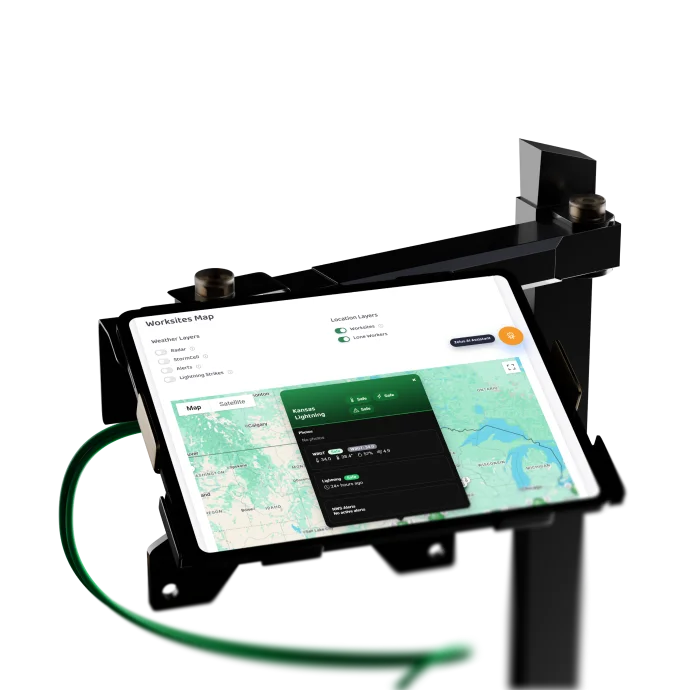

Zelus applies WBGT as part of a broader environmental risk intelligence methodology.
Rather than presenting raw data alone, Zelus uses consistent logic and thresholds to help teams and organizations interpret conditions and act confidently.
Zelus solutions:
This approach helps reduce ambiguity and supports safer decision-making at every level.
While the underlying WBGT logic remains consistent, how it is applied depends on the environment and the people making decisions.
Teams and field operations benefit from immediate alerts and mobile access.
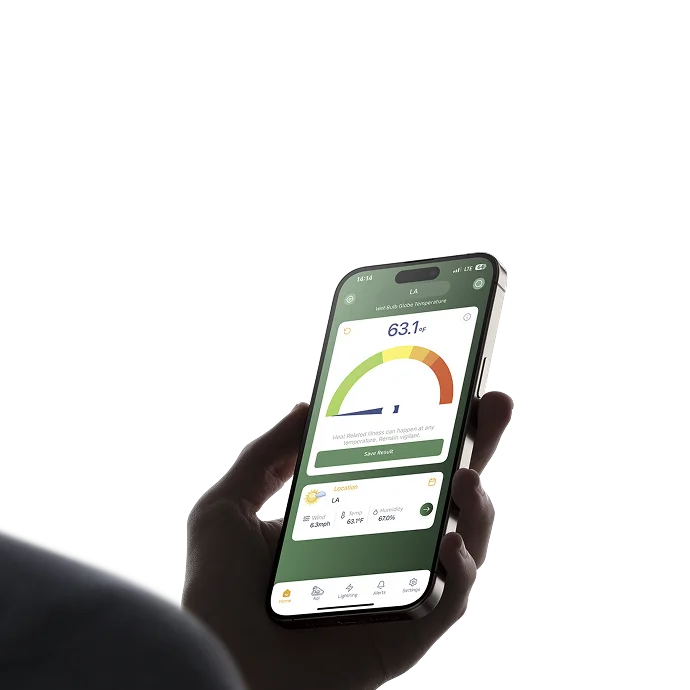
Organizations and enterprises require oversight, reporting, and accountability.
Zelus supports both needs through independent solutions built on the same environmental intelligence foundation.
Whether you manage a single site or multiple locations, Zelus Enterprise helps you understand environmental risk — and act with confidence.